 By Alexa Gavin
A seafood consignment may pass through harvesting, processing, storage and trading businesses before it reaches the final buyer. In international seafood sourcing, the practical challenge is keeping the product’s identity connected to its records at every handover. Buyers need to establish how that connection survives changes in packaging and ownership, especially when a shipment contains material from more than one source.
Establish which origin information the product needs
Start with the species and whether the seafood is wild caught or farmed. Then define the source information required for the product and destination market. The country where fish was caught or farmed, the country where it was processed and its customs origin can answer different questions, so one general country-of-origin field may be insufficient.
Have the relevant technical and customs advisers establish which definitions apply. This is particularly important when a product crosses borders for processing before being exported again. The aim is to make the purchase specification and supporting records describe the same supply chain without treating different types of origin as interchangeable.
Follow batch identity through processing and repacking
A processor may split one incoming batch into several products or combine material from different batches into one finished lot. Ask how its records connect those inputs and outputs. A new code on the finished carton is useful only if the business can trace it back through the relevant production records.
Request an example involving the product being purchased. Check whether the supplier can identify the relevant sources and account for the resulting quantities, allowing for recorded processing losses and by-products. The purpose is to understand the material flow and investigate unexplained gaps, rather than expecting raw and finished weights to be identical.
Review shipment documents before the goods depart
Agree who prepares each document and who checks it against the order and packing information. Product descriptions, quantities and batch references should be consistent or clearly reconciled. Differences discovered while the shipment is still being prepared are generally easier to resolve than questions raised after arrival.
The required document set depends on the product, route and destination. Health certification, catch documentation or establishment approval may be relevant, but requirements should be confirmed for the actual shipment. A supplier’s experience exporting elsewhere does not establish that its usual paperwork will satisfy a new market.
Make the records accessible to the people who need them
Identify which business holds each part of the history and how quickly it can retrieve the information. A trading company’s invoice may establish the immediate transaction while leaving the underlying processing or harvest records with another organisation. Clarify access arrangements before relying on those records to support the purchase.
Run a practical traceability exercise using an actual lot code. Ask the supplier to explain the route back to source and identify the finished stock or customers linked to it. Record missing information and retrieval delays, then agree how those gaps will be addressed before the next exercise.
Keep traceability claims within the available evidence
A detailed history helps a buyer investigate a product, but it does not automatically prove every claim about legality, working conditions or environmental performance. Decide which claims are needed and what separate supporting evidence each requires. Any change in source should trigger a review of the claims affected.
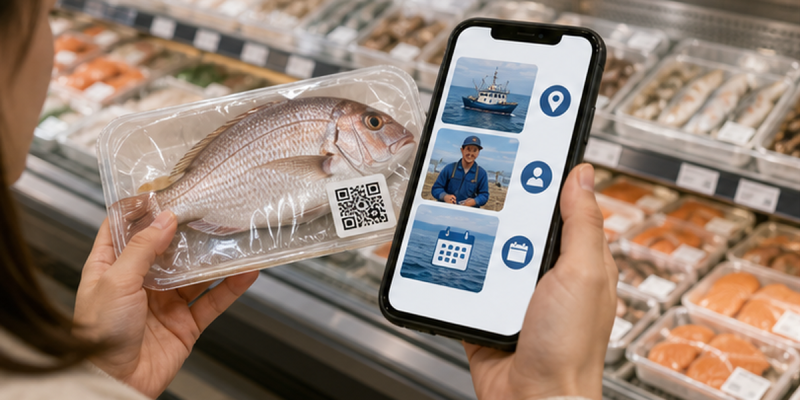
Using common seafood traceability data standards can make information easier to exchange between businesses that operate different systems. The benefit depends on accurate entries and maintained connections between batches; a digital record is only as useful as the information captured and checked at each handover.
Traceability becomes workable when records follow the seafood through the changes that actually occur. Define the information needed at the outset, test the links through processing and confirm shipment requirements early, so the final buyer can obtain a coherent history when it matters.